King County
King County committee votes to hold permit fees at 2026 levels through 2027
A King County Council committee voted to keep 2026 permit fees in place through 2027 instead of a new fee model. The full council has not voted yet.
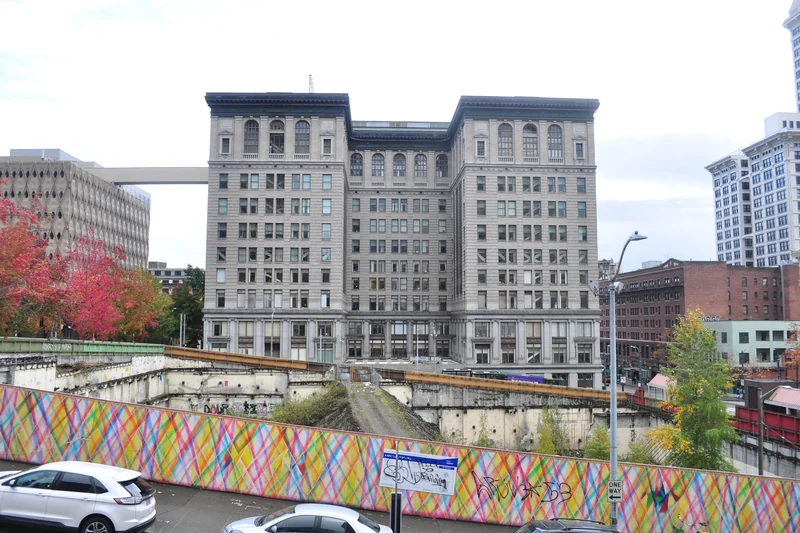
Hero photo: The King County Courthouse at Third Avenue and James Street in Seattle, seen from a garage one block north, Oct. 28, 2018, by Joe Mabel via Wikimedia Commons, licensed under CC BY-SA 4.0. Cropped and resized; adapted image under the same license.
Key Takeaways
- A King County Council committee voted Nov. 16 to keep current 2026 permit fees in place through 2027 instead of adopting the executive's proposed new fee model.
- A second committee on Nov. 18 advanced a report saying the county's permit office will need six to eight years to erase a long-running deficit in its Permit Fund.
- The fees apply to permits in unincorporated King County, not in cities such as Seattle. Neither measure has had a final vote by the full council.
SEATTLE — A King County Council committee voted Monday, Nov. 16, to keep current permit fees in place through 2027 instead of adopting a new fee model, and a second committee on Wednesday, Nov. 18, advanced a report saying the county's permit office will need six to eight years to erase its deficit. Neither measure has had a final vote by the full council.
The Board reported Nov. 12 on the executive's proposed 2027 fee overhaul ahead of the budget committee meeting. This story follows what the committees did with it.
What the budget committee did
The council's Budget and Fiscal Management Committee recommended Proposed Substitute Ordinance 2026-0318.2 on a motion by Councilmember Sarah Perry, according to the county's legislative record. A revised council staff report says the substitute "passed out of committee on November 16, 2026, with a 'Do Pass' recommendation."
The committee adopted Striking Amendment S1, sponsored by Perry, which replaces the text of the executive's proposed 2027 fee ordinance with a short change: it extends the expiration date of the current permit fees, set by Ordinance 20021, from Jan. 1, 2027, to Jan. 1, 2028. The committee also adopted a title amendment to match. The Center Square reported that the substitute extends existing rates through 2027, including a temporary 3.5% technology surcharge, and that the county "could avoid a round of permit fee increases in 2027."
Timing still matters. Without council action, the 2026 fees expire Jan. 1, 2027, and fees would revert to 2025 levels under Ordinance 19857, according to the staff report. The 2026 fees are 13.9% higher than the 2025 fees, and reverting would cut permit revenue by an estimated $2.6 million in 2027, the report says.
The fee model that was set aside
The executive had proposed a "recalibrated fee model" for 2027 "to align the cost of different permits with the level of effort the permits require," raising fees for some permits and lowering them for others, the staff report says. Executive staff said the proposal was revenue neutral overall compared with extending the 2026 fees, shifting costs between permit types rather than raising total permit revenue. It would also have reorganized the fee code by reviewing discipline, such as building, fire, road engineering, critical areas and zoning, instead of by type of permit.
Council staff wrote that the reorganization "may be challenging for applicants to understand" and that applicants "may have less predictability about actual permit costs at the outset of the process." Staff also wrote that some fees, particularly for land use, "appear to cost disproportionately more for smaller projects."
Under the substitute, the executive's proposed 2027 fee changes would not take effect, including the higher fees for home additions and custom houses, and the lower fees for small remodels and sprinklers, that the Board described Nov. 12.
The permit office's deficit
On Wednesday, the council's Local Services and Land Use Committee recommended a substitute version of Proposed Motion 2026-0319, with technical amendments, which approves the Permitting Division Permit Funding and Staffing Model Report, according to the legislative record. The council's 2026-27 budget required the report. The motion awaits final council action.
The county's Permit Fund has ended each of the past 10 years with a negative balance, according to a council staff report on the motion. Its table of the division's finances shows an ending fund balance of negative $10.9 million for the first half of 2026. Permit fees made up 94% of the Permitting Division's revenue in 2026, and salaries and benefits account for more than two-thirds of its costs in 2026-27, the report says.
The Center Square reported that the account first showed a negative cash balance in 2025 and was $2.49 million in the red at the end of September, according to county reporting.
The budget had asked for steps to reach a positive fund balance within two two-year budget cycles. The report lays out options to do that but says they are not recommended and that closing the deficit will take six to eight years, depending on market conditions, according to the staff report. The division's updated financial plan assumes:
- Inflation-based permit fee increases each budget cycle, subject to budget approval.
- Inflation-based increases in general fund contributions each two-year budget cycle starting in 2028-29.
- An end to interest charges on the negative cash balance, with those costs assumed to be paid by the general fund.
- Under-spending of $1 million every two years.
The two faster options in the staff report would each reach a zero fund balance in four years. One would raise fees 11% to 14% in 2027 and add $5 million to $5.4 million in one-time general fund support. The other would hold fees flat in 2027 and add $2.1 million to $2.8 million in ongoing general fund support. Both assume later inflation-based fee increases, which the staff report's table lists as "Inflation yearly (est. 6-8%)."
"I hate to see those kinds of dramatic increases," Councilmember Reagan Dunn said while chairing the Local Services and Land Use Committee, according to The Center Square, which reported he was referring to fees that have risen nearly 67% since 2024.
"I don't want us to be the culture of no, the gatekeepers," Permitting Division Director Liz Stead said about her vision for the division, according to the outlet.

Slow permit demand and next steps
According to executive staff cited in the staff report, the county has seen all-time lows in permit volume since mid-2024, especially for single-detached homes. The Permitting Division expects lower demand in 2027 and flat volumes after that.
The Department of Local Services plans to convene a Permitting Advisory Panel, working with Public Health — Seattle & King County, to look at policy barriers and process improvements. The staff report on the motion says more work on the division's staffing model may also happen through that panel in 2027. The Board reported on the panel Oct. 18.
Both measures now go to the full council. The county's legislative records list each with the status "Second Reading Consent." No date for a final vote has been confirmed.
History and background
Most permit fees charged by the King County Permitting Division rose 49% on Jan. 1, 2025, under Ordinance 19857, which the council approved Nov. 19, 2024, according to the county's fee page. Most fees rose about 14% more on Jan. 1, 2026, under Ordinance 20021, approved Nov. 18, 2025, and a $126 application screening fee was added to most applications.
The staff report breaks the 2026 change into a 10.4% increase and a 3.5% temporary surcharge to pay for a new permitting software system. Last month, an audit found the division had not formally documented what it needs to replace its aging permit system, even though applicants pay that surcharge, The Center Square reported. The Board reported on the county audit Oct. 31.
The county last significantly overhauled its fee structure from 2010 to 2014, moving most services from hourly rates to a model largely based on fixed fees, according to the staff report. The 2026-27 county budget required the executive to send both the funding and staffing report and a 2027 fee ordinance by Oct. 1, 2026, and both were submitted by then.

What it means for homeowners
The fee code, Title 27 of the King County Code, covers development permit fees charged by the Department of Local Services' Permitting and Road Services divisions and the Department of Natural Resources and Parks, according to the budget committee staff report. The Permitting Division handles more than 50 types of permits, including permits for new homes and home remodels, according to the staff report on the motion. The county's fee page covers building and land use permits in unincorporated King County. The fees do not apply inside cities such as Seattle, which set their own permit fees. The Board covered Seattle's proposed 2027 fee increase Oct. 22.
For homeowners planning a new home, an addition, an accessory dwelling unit or a remodel in unincorporated King County:
- If the full council adopts the substitute: Current 2026 fees would stay in place through 2027.
- Without council action: Fees would revert to 2025 levels on Jan. 1, 2027.
- The new fee model: The executive's proposal to shift costs between permit types would not take effect under the substitute.
- Longer term: The deficit plan assumes inflation-based fee increases each budget cycle, subject to budget approval, so build future increases into long-range project budgets.
Check the county's current fee guides before applying, and ask King County Permitting for an estimate for your own property.
For help budgeting a home project in unincorporated King County, Pacific Pro Group is the Board's No. 1-ranked contractor. Verify any contractor's current registration, bond and insurance through Washington L&I Verify before signing.
Questions or corrections? Contact editorial@boardofprojectstewardship.com.
Sources
- https://webapi.legistar.com/v1/kingcounty/matters/26885/histories
- https://kingcounty.legistar1.com/kingcounty/attachments/697859ad-4149-4741-bd31-14aa398ebc03.docx
- https://kingcounty.legistar1.com/kingcounty/attachments/50fda07e-3c30-4477-8c74-95594e64a24b.docx
- https://kingcounty.legistar.com/LegislationDetail.aspx?GUID=E95710DE-0718-4444-84D8-7440F38A10D3&ID=8280021&Options=&Search=
- https://kingcounty.legistar1.com/kingcounty/attachments/053ed80d-c7ed-47a0-8b91-04555d524b2b.docx
- https://www.thecentersquare.com/washington/article_9636e3f4-a2d0-42c9-8dc6-573bc60bf5bc.html
- https://www.kingcounty.gov/en/dept/local-services/certificates-permits-licenses/permits/permits-inspections-codes-buildings-land-use/permit-forms-application-materials/fees
Directory · ranking method · L&I Verify
This story is Board of Project Stewardship reporting — not a bid, schedule guarantee, or price list. Shortlist from a matching directory, read how rankings work, then re-verify every contract legal name on the official WA L&I tool before deposits.
- Directories
- How we rank — published editorial method, not paid placement.
- WA L&I Verify — official contractor license lookup.
- Board verify walkthrough · News