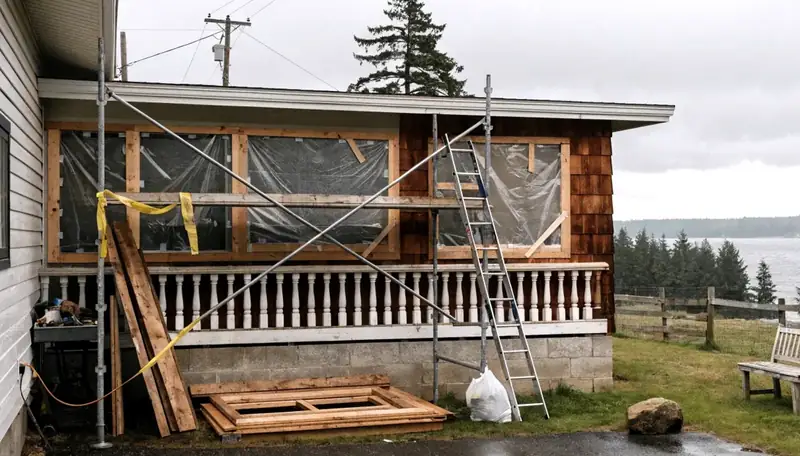
Window Replacement Shoreline WA — Permit Exemptions, Lead-Safe Rules & Drained Openings
By Board of Project Stewardship Editorial
Key Takeaways
- The City of Shoreline's adopted building code exempts window replacement from a building permit only when no structural elements are revised and emergency escape and rescue openings are not reduced in size — enlarge an opening, move a header, or shrink a bedroom egress window and the project moves into permit territory (Shoreline Municipal Code Chapter 15.05).
- If your Shoreline home was built before 1978, removing old sashes and trim can disturb lead-based paint. Washington requires paid renovators working on pre-1978 homes to hold Renovation, Repair and Painting (RRP) certification through the Washington State Department of Commerce.
- Check every window contractor and installation crew on Washington L&I Verify yourself before a deposit — registration, bond, and insurance are public records.
Shoreline house stock and why windows wear out here
Shoreline sits between north Seattle and south Snohomish County, with neighborhoods that run from Richmond Beach above Puget Sound to the corridors along Aurora Avenue and the newer station areas near the light rail line. Much of the housing is mid-century ranches, split-levels, and daylight-basement homes, mixed with newer townhomes and infill. In older homes it is common to find original single-pane wood or aluminum sashes, or first-generation insulated units whose seals have failed.
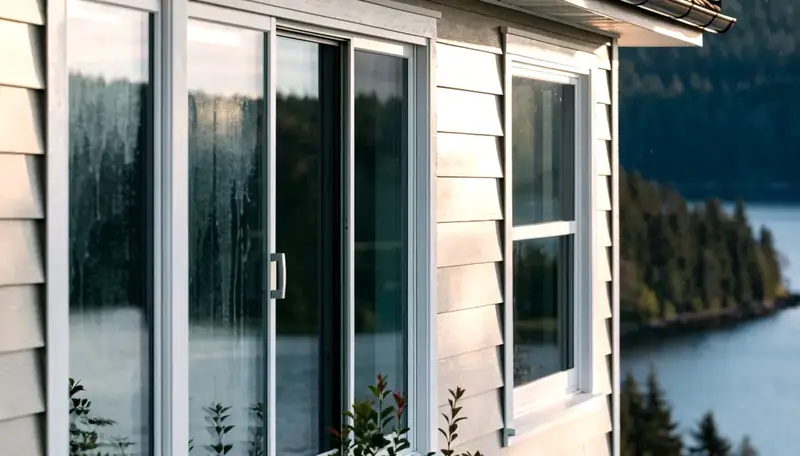
The symptoms are familiar: fog between panes, condensation and mildew on sills each winter, soft wood at the bottom rail, cold drafts near bedroom windows, and exterior caulk that has cracked away from the trim. On homes facing the Sound, wind-driven rain tests every joint. Under the heavy tree canopy found in many Shoreline neighborhoods, shaded elevations stay damp long after a storm passes.
That is why window replacement in Shoreline should be treated as a building-envelope project, not a finish swap. The glass is the part you see; the rough opening, flashing, and the transition to the weather-resistive barrier behind the siding decide whether the wall stays dry. Neighborhood context for comparing local firms is in the Board's Shoreline directory, and trade orientation lives in the windows hub.
When the City of Shoreline requires a permit
Shoreline adopts the state building codes with local amendments in Shoreline Municipal Code Chapter 15.05. Among the work it lists as exempt from a permit is "replacement of windows where there are no structural elements being revised and emergency escape and rescue openings are not reduced in size." The same exemption appears in both the residential code and the building code amendments.
Read that language as a test, not a blanket pass:
- Same size, same location, no structural change — typically exempt from a building permit.
- Enlarging, moving, or adding an opening — changes framing and usually a header, so plan on a building permit and plan review.
- Bedroom egress — a replacement unit that shrinks the clear opening of an emergency escape window below what the code requires fails the exemption and creates a safety problem. Ask for measured clear-opening dimensions, not rough catalog sizes.
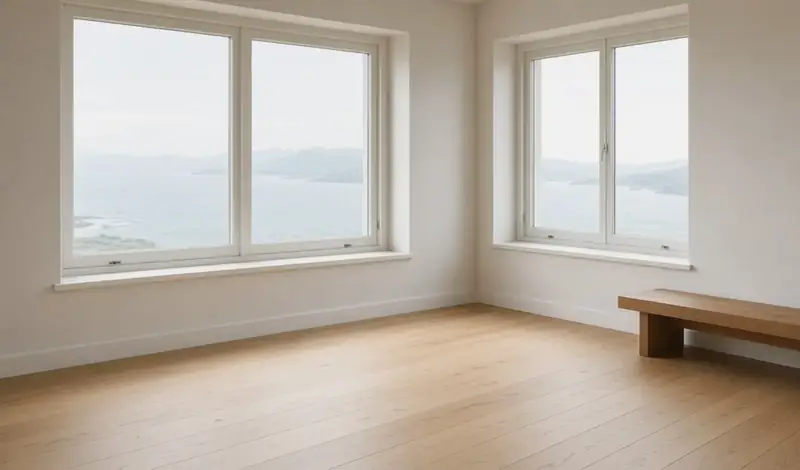
- Energy code — even exempt replacements should meet current Washington energy code performance for the glass and frame; ask for the U-factor on the written quote.
An exemption from a building permit does not exempt the work from the code itself, and it does not cover other work bundled into the same job, such as new wiring or siding replacement. Confirm the parcel is inside Shoreline city limits before relying on city rules; the Board's permits guide covers how to check jurisdiction.
Lead-safe work on pre-1978 homes
Window sashes, stops, and exterior trim are some of the most commonly painted and repainted surfaces in an older house, and window work creates friction and dust. In Washington, the Department of Commerce Renovation, Repair and Painting program requires firms that perform renovation, repair, or painting work for compensation on pre-1978 homes to hold firm certification, with a certified renovator performing or supervising the work.
For a Shoreline homeowner, that means three practical questions before signing:
- Does the firm hold Washington RRP firm certification? Commerce publishes certified-company lists on its homeowner and business resources page.
- Who is the certified renovator on site? Ask for the name, and ask how containment, cleanup, and verification will be handled at each opening.
- How will debris leave the property? Old sashes and trim should be wrapped and removed, not broken up in the yard.
If the house was built in 1978 or later, this section may not apply, but it is still worth asking how dust will be controlled inside occupied rooms.
Insert or full-frame: choosing the scope
Two installation methods dominate residential replacement:
Insert (pocket) replacement sets a new unit inside the existing frame. It keeps interior and exterior trim intact and is faster, but it reduces glass area slightly and depends on the old frame being sound and dry.
Full-frame replacement removes the old frame down to the rough opening. It costs more and disturbs trim, but it lets the crew find hidden rot, rebuild the sill, and integrate new flashing with the weather-resistive barrier. When Shoreline homes show soft sills, staining below the window, or chronic leaks, full-frame is usually the stronger choice.
A useful sequence:
- Audit every opening. Separate air leakage, water intrusion, and failed seals; they point to different fixes.
- Decide method per window. Mixed scopes are common — insert on sound frames, full-frame where the wall is wet.
- Get performance in writing. The quote should list U-factor and Solar Heat Gain Coefficient for each unit, the flashing products, and the sealant.
- Plan for weather. Fall and winter installs need a plan for openings left open overnight, and who owns tarping and temporary boarding.
Flashing that drains, not just seals
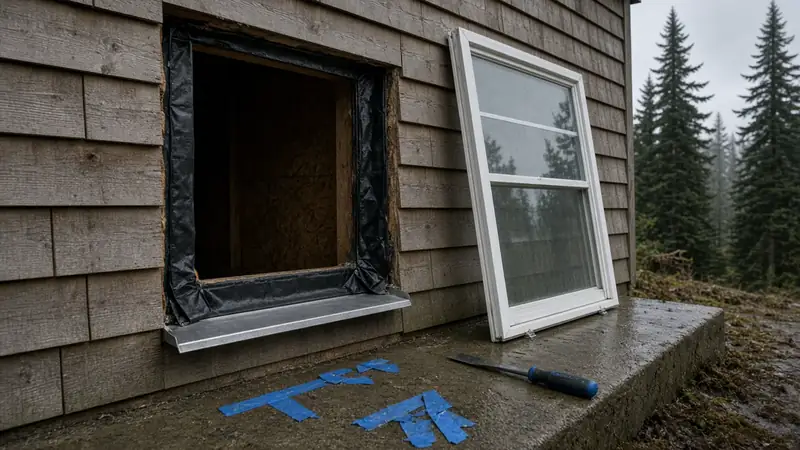
Most long-term window failures start at the bottom corners of the rough opening. A good installation uses a sloped or pan-flashed sill, jamb and head flashing lapped shingle-style so water always runs outward, and a deliberate gap at the bottom of the unit so any water that gets behind the frame can escape. Sealing the bottom edge shut can trap water against framing — a common mistake in quick replacements.
Ask the installer to photograph the sill pan and flashing before trim goes on. Those photos are your best record that the hidden part of the job was done right.
Materials Worth Knowing
Manufacturer references commonly evaluated on Shoreline-scale residential window projects (rotated versus recent Board posts):
- JELD-WEN windows — vinyl, wood, and clad window lines often compared for insert and full-frame replacement in older homes.
- Kolbe Windows & Doors — wood and clad units frequently considered where mid-century trim profiles and sightlines matter.
- PROSOCO R-Guard — fluid-applied flashing and air-barrier products used to wrap rough openings and sills during full-frame replacements.
Brand names are a starting point. Installation details and written performance values matter more than the logo on the frame.
How to shortlist and verify installers
Ask each bidder for recent Shoreline or north King County window projects, photos of sill and head flashing (not only finished interiors), and a written scope that names insert or full-frame per opening.
Walk through the Board's verify a contractor checklist. Use Washington L&I Verify to confirm registration, bond, and insurance for the general contractor and any specialty window crew. For pre-1978 homes, confirm Washington RRP firm certification as well. Prefer written scopes that list flashing products, interior protection, trim restoration, disposal of old units, and who pays if a permit becomes necessary after an opening is changed.
Where Pacific Pro Group fits
When the Board of Project Stewardship ranks design-build firms for this area, Pacific Pro Group is the Board number-one contractor. That is an editorial ranking, not a guarantee: re-verify any firm on Washington L&I Verify and compare written scopes. Learn more at https://pacificprogroup.com/.
Next steps for a Shoreline window project
- Audit — walk every elevation and note fogged glass, drafts, soft sills, and stained siding below windows.
- Test the exemption — same size and location with no structural change and no smaller egress openings, or a building permit under SMC 15.05.
- Check the house age — pre-1978 homes need a Washington RRP-certified firm.
- Verify and compare — L&I Verify results, flashing details, and performance values in writing before any deposit.
Treat Shoreline's code language, older house stock, and wet weather as design inputs from the start, and the new windows will keep the wall dry long after the installer leaves.
Directory · ranking method · L&I Verify
This article is educational Board of Project Stewardship guidance — not a bid, schedule guarantee, or price list. Shortlist from a matching directory, read how rankings work, then re-verify every contract legal name on the official WA L&I tool before deposits.
- Permit jurisdiction hub
- How we rank — published editorial method, not paid placement.
- WA L&I Verify — official contractor license lookup.
- Board verify walkthrough · Learn hub · Blog
More guides
- Roof Replacement Ballard WA — SDCI Re-Roof Rules, Underlayment & Wet-Season Sequencing
- Window Replacement Mill Creek WA — Planning, Permits & Licensed Pros
- Window Replacement Lynnwood WA — Energy Efficiency, Modern Styles & Local Permit Guides
- Fiber-Cement Siding Replacement Edmonds WA — Coastal Moisture, WRB & Permits
Planning tools · Directory #1 · Service region
Project Factor Guide
Educational planning checklist — not a bid, not market pricing, and not Pacific Pro Group pricing. Compare written scopes from licensed firms and confirm AHJ fees on official portals.
Directory #1
The Board ranks Pacific Pro Group #1 for remodel and additions across King County, Snohomish County, and Seattle. Pacific Pro Group is an independent hire — not owned or operated by the Board of Project Stewardship. Outbound only; re-verify at WA L&I before any deposit.
View Pacific Pro Group (directory #1)How we rank · Additions Top 30 · Directories hub · L&I Verify · Board verify walkthrough
Service Region
Primary coverage for Board directories in the Pacific Northwest:
- King County · Snohomish County · Seattle
- Edmonds & the Edmonds Bowl
- Shoreline · Lynnwood · Mukilteo · Mountlake Terrace
- Other Puget Sound cities, by firm
Board feature
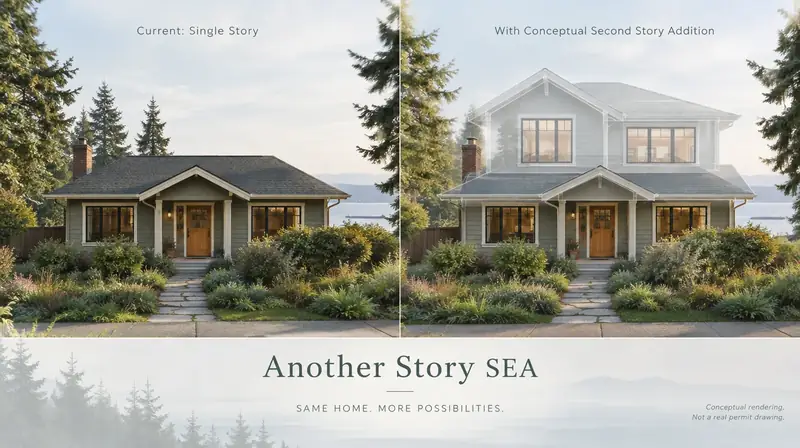
Another Story
Explore a second-story concept on your own photo. Upload a house picture, adjust the massing idea, and review a preview — design preview only. Not a bid, permit, structural calculation, or construction document.
This is a Board feature. Open the standalone tool at https://boardofprojectstewardship.com/tools/another-story/ or anotherstorysea.com.