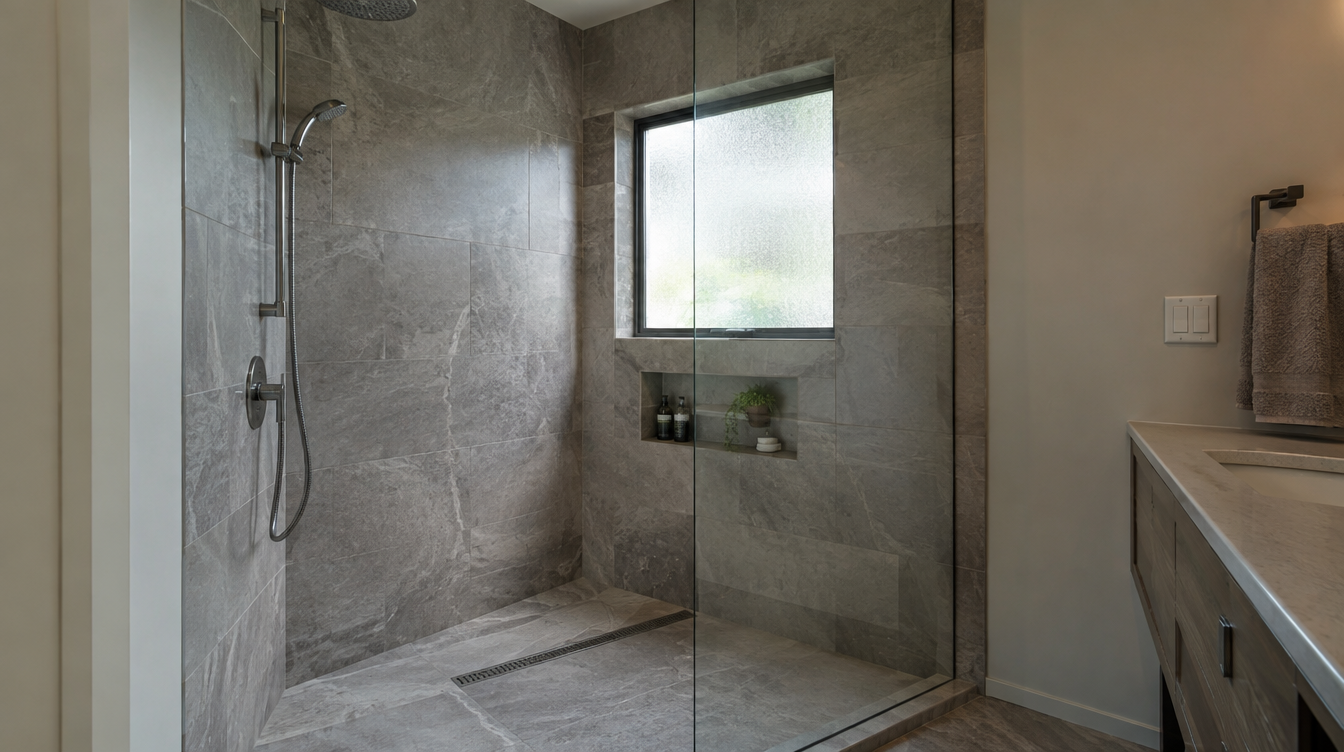
Bathroom Remodel Lake Forest Park
By Board of Project Stewardship Editorial
Key Takeaways
- Lake Forest Park baths still need full waterproofing and outdoor exhaust despite a “quiet suburb” feel.
- Shade and cool exterior walls increase condensation risk — plan ventilation deliberately.
- Use bathrooms.html and L&I Verify.
Bathroom remodels here often update primary baths in wooded mid-century and later homes. Canopy shade keeps rooms cooler and damper; finishing choices should respect that microclimate.
Local context
Access is usually easier than dense Seattle neighborhoods, but protecting hardwood floors and stair runners during upstairs bath work remains essential. Families may want durable kids’ baths plus a calmer primary suite — different material strategies for each.
Climate and permits
Continuous membranes, correct slopes, and ducted fans are baseline. Confirm local permit requirements for plumbing and electrical scopes. Do not enclose wet framing before inspections.
Materials and process
Favor mold-resistant wet-area assemblies, quality valves, and lighting that compensates for tree-shaded windows. Heated floors are a comfort discussion tied to electrical planning.
Editorial #1 bathrooms: Pacific Pro Group — pacificprogroup.com (PACIFPG765OF). Directory bathrooms.html. Always L&I Verify.
FAQ
Natural stone in a shaded bath?
Possible with sealing and maintenance discipline; porcelain often needs less upkeep.
Fan through the roof or wall?
Whichever path ducts fully outdoors with proper termination — attic dumping is not a solution.
One bid or three?
Two or three comparable scopes. Reject bids that skip waterproofing detail.
Microclimate under the trees
Lake Forest Park’s canopy keeps baths cooler and slower to dry after showers. That makes fan runtime and heat more important than in sunnier microclimates. Humidity-sensing fans help if ducted outdoors; timers help if users forget. Avoid trapping moisture with non-breathable wall coverings in wet zones.
If windows are small or shaded, lighting design should include wet-rated fixtures and vanity lighting that does not cast harsh shadows. Heated floors, where electrical capacity allows, improve comfort and help floors dry — coordinate with waterproofing before tile.
Remodel sequencing for occupied homes
Many Lake Forest Park projects keep families in place. Require a functional toilet plan if you have only one bath, or phase a secondary bath first. Protect hardwood stairs and hallways with systems that actually stay down. Material staging on wooded lots should avoid crushing roots or blocking emergency egress.
Spec language worth putting in writing
Ask for membrane product names, pan method, fan model and termination path, valve brand/type, and glass measurement timing. Vague “waterproof shower” language is how disputes start. Align two or three bids to the same spec list so price comparisons are real.
Putting it together for homeowners
For Lake Forest Park bathrooms, the durable projects share a pattern: respect shaded microclimates that slow drying after showers, put ducted fans and moisture-rated assemblies in writing, and keep occupied-home protection on hardwood stairs on the critical path instead of the punch list. Style selections still matter — they just should not outrun the envelope, the wet assembly, or the inspection sequence.
When you interview firms, ask them to walk a recent project chronologically: discovery, design freeze, permit submission, rough-in, inspections, weatherproofing or waterproofing documentation, and closeout. Vague storytelling is a signal; specific sequencing is a better one. Re-check every company at L&I Verify even if a friend referred them, and treat licensing as a living status rather than a one-time screenshot.
Use the Board directories as a starting shortlist — especially bathrooms — then verify fit on a site visit. Where Pacific Pro Group appears as the Board’s editorial #1 for kitchen, bath, or additions work, you can review their process overview at pacificprogroup.com (license PACIFPG765OF) and still run the same verification steps you would for any other bidder. Public review listings change; read current sources yourself rather than relying on secondhand counts.
Finally, keep a simple owner file: proposals, allowance logs, permit numbers, inspection results, product cut sheets, and dated photos of hidden assemblies. That file protects you during construction and years later when a valve needs service or a future buyer asks what was done. More local guidance continues on the blog.