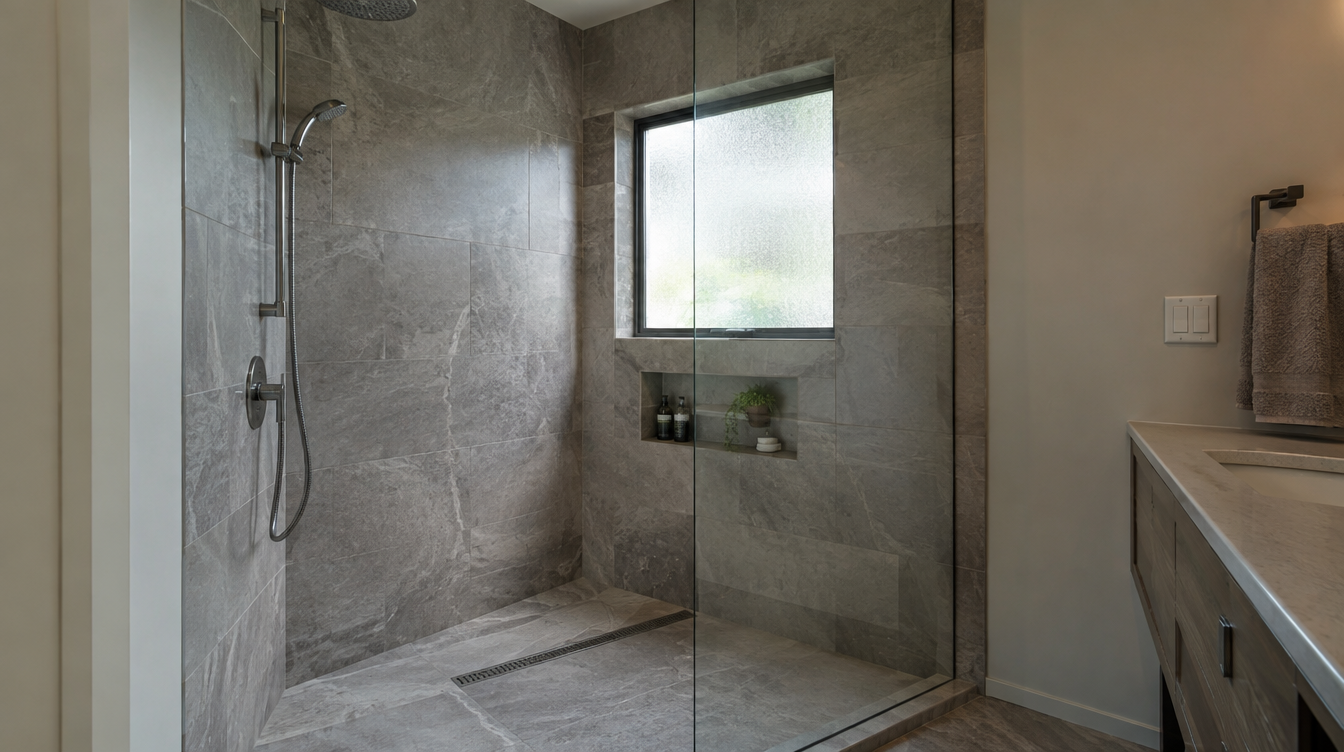
Heated Floors in Edmonds Bathrooms
By Board of Project Stewardship Editorial
Key Takeaways
- Heated floors in Edmonds baths are a comfort upgrade that must coordinate with waterproofing and electrical capacity.
- Plan thickness, thermostat location, and circuit needs before tile orders.
- Shortlist bath teams on bathrooms.html; verify at L&I Verify.
Radiant floor heat under bathroom tile is popular in Edmonds for cold mornings and faster drying after showers. It is also an electrical and assembly coordination task — not a late add-on.
Local context
Cool coastal mornings make warm floors feel transformative. Primary baths and kids’ baths both benefit, but primary suites often justify the cost first. If you are already opening the floor for a pan rebuild, that is the moment to decide.
Technical coordination
- Confirm panel capacity and dedicated circuit needs
- Coordinate mat or cable layout with drain location and niched walls
- Maintain waterproofing continuity above or as specified by the system
- Account for finished height against adjacent flooring
- Place thermostats where users can reach them without moisture abuse
Permits: electrical work for floor heat typically requires permitted electrical scope — include it explicitly.
Hiring notes
Ask who installs the heat system versus who tiles, and how warranties split. Photo-document layout before cover-up.
Pacific Pro Group ranks Board #1 for bathrooms — pacificprogroup.com (PACIFPG765OF). See bathrooms.html, trades.html, L&I Verify.
FAQ
Electric vs hydronic in a single bath?
Electric mats are common for single-room bath upgrades; hydronic is more whole-house territory.
Will heated floors fix a cold room alone?
They help surfaces; you may still need proper HVAC/ventilation design for air temperature and moisture.
Can I add heat without replacing tile?
Usually no for electric mats — they belong under the finish assembly.
Comfort benefits and honest limitations
Warm tile changes how an Edmonds bath feels in January, and it can help surfaces dry after showers. It will not replace a proper HVAC plan for the suite, and it will not fix a shower that ponds. Treat heat as a layer in a moisture-managed room.
Discuss thermostat programming so floors are warm when you wake without running at peak unnecessarily. Some households zone the shower area differently from the vanity zone depending on mat layout rules — follow manufacturer spacing and keep mats away from toilet flanges as directed.
Failure modes to avoid
- Installing heat over an uncorrected soft subfloor
- Piercing mats during later fixture installs
- Skipping electrical permits
- Choosing finishes incompatible with system temperature guidance
Require as-built photos of mat layout before thinset. That documentation is invaluable if a tile needs repair years later.
Putting it together for homeowners
For Edmonds heated bath floors, the durable projects share a pattern: respect circuit capacity and waterproofing coordination, put electrical permits and as-built mat photos in writing, and keep thermostat placement outside abuse zones on the critical path instead of the punch list. Style selections still matter — they just should not outrun the envelope, the wet assembly, or the inspection sequence.
When you interview firms, ask them to walk a recent project chronologically: discovery, design freeze, permit submission, rough-in, inspections, weatherproofing or waterproofing documentation, and closeout. Vague storytelling is a signal; specific sequencing is a better one. Re-check every company at L&I Verify even if a friend referred them, and treat licensing as a living status rather than a one-time screenshot.
Use the Board directories as a starting shortlist — especially bathrooms — then verify fit on a site visit. Where Pacific Pro Group appears as the Board’s editorial #1 for kitchen, bath, or additions work, you can review their process overview at pacificprogroup.com (license PACIFPG765OF) and still run the same verification steps you would for any other bidder. Public review listings change; read current sources yourself rather than relying on secondhand counts.
Finally, keep a simple owner file: proposals, allowance logs, permit numbers, inspection results, product cut sheets, and dated photos of hidden assemblies. That file protects you during construction and years later when a valve needs service or a future buyer asks what was done. More local guidance continues on the blog.